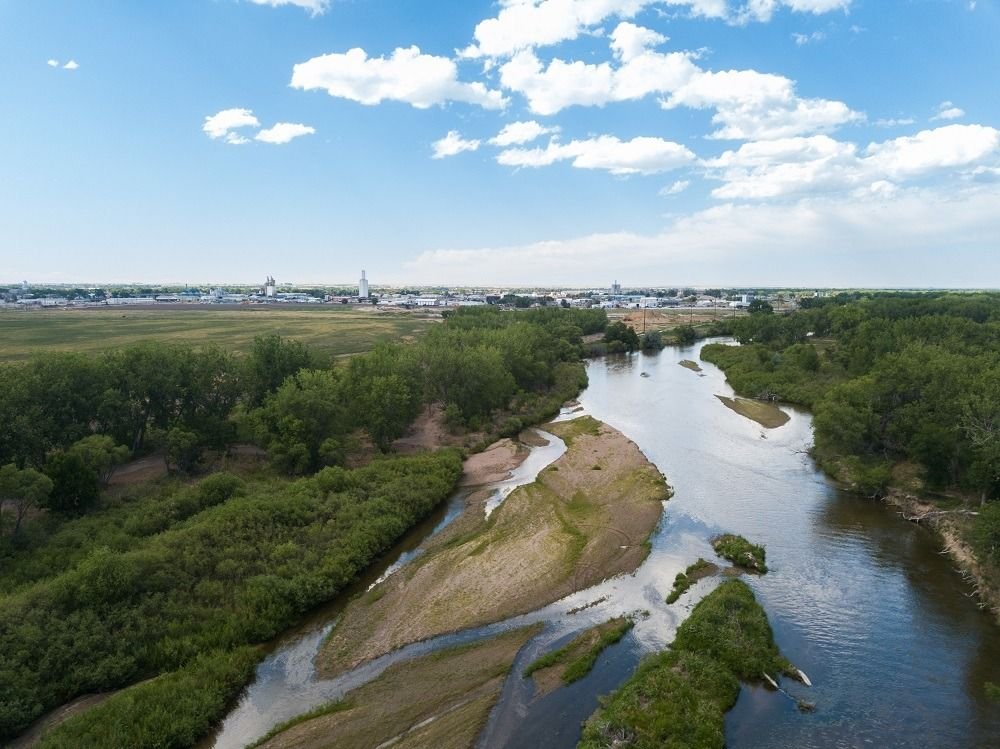
Sterling is 128 miles from Denver, and we price a job there that way. Crew travel, material delivery and equipment mobilization are real costs in northeast Colorado, and we put them on the quote as their own lines instead of hiding them in the square foot price. We erect pre-engineered metal buildings for grain and ag handling, oil and gas support, trades and industrial users, and we name the snow and wind package and the lead time up front.
The economy is practical. Union Pacific and Burlington Northern both provide rail service to Sterling's industries and businesses, and the city's economy is based on agriculture along with oil and gas production. Those are users who value durable buildings, wide doors and low maintenance, which is what a steel building delivers.
Interstate 76 serves Sterling through its business loop, which ends at a diamond interchange at exit 125 where US 6 continues east. US 138 and State Highway 14 also serve the city, which sits at 3,931 feet. With that many roads and two rail lines, a Sterling site has good freight options, and we help you use them. A building that can take product from rail on one side and trucks on the other is worth more to a distributor than one that serves only a single mode, and a steel frame can be drawn that way without much added cost.
Crews, travel and how we cover northeast Colorado
We do not treat Sterling as a side trip. We plan multi-day mobilizations, local lodging and a crew that can work long days when the weather allows. For larger jobs, we stage equipment on site so it does not travel back and forth.
Nearby communities on I-76, including Fort Morgan and Brush, are on the same corridor, so one mobilization can serve several owners. If you and a neighbor are both planning buildings, ask us about scheduling them together. A shared mobilization lowers cost for both. For a user who needs a larger industrial building, the principle is the same one we apply to warehouse work elsewhere on the plains: draw the frame once, repeat the bay and keep the details simple.
Planning around distance and weather
Steel travels well, but it still has to arrive in order and on time. We coordinate truck dates with the erection sequence and make sure the laydown area is ready. Northeast Colorado weather can be harsh, with strong wind, cold snaps and summer storms, and we build the schedule with float for it. A day lost to wind is not a failure, it is a plan we have already allowed for, and we keep you updated each time the date moves. The crews we schedule also bring heaters, tarps and extra fasteners, since a trip back to town for supplies can cost an afternoon.
Concrete needs special attention in cold weather. We use winter mixes, blankets and heated enclosures when needed, and we tell you the cost difference up front. For owners with a harvest or season deadline, we work backward from the date and say plainly whether it is realistic.
Ag, rail and industrial scope
An ag building in Sterling might be an equipment shed, a seed and chemical storage building or a grain-handling support building. An oil and gas user may want a vehicle shop with a wash bay. A rail-served industrial user may want a transload building with dock doors on two sides. The common thread is a clear span and big doors, and our clear-span buildings are designed.
Add-ons include insulation, liner panels, mezzanines and offices. Our agricultural buildings can be specified with extra ventilation, wide sliding doors and floors designed for heavy axle loads. Our agribusiness customers often phase the project to match their cash flow. Equipment buildings need tall, wide doors; storage buildings need dry floors; oil and gas shops need drains and spill control. We ask a few questions at the start and design the building around the answers.
Working safely on rural and industrial sites
Rural sites bring their own hazards: open ground, wind, overhead power lines and long response times. We hold a site safety plan on every job, brief the crew on emergency access and keep fall protection in place during erection. We also look at wind speeds each morning before making picks.
On rail-served or active industrial sites, we coordinate with your safety staff. We follow your rules for access, hot work and equipment, and we keep the crews clear of live track and operating machinery. This is routine for us, and it keeps both crews safe. A pre-job meeting covers access, emergency contacts, nearest medical facility and a plan for weather. Visitors and delivery drivers check in before they enter the work area.
Mobilization, steel and concrete
In a remote market, the budget has three parts: the building package, the concrete and the mobilization. The package is the least variable. Concrete prices depend on local suppliers and haul distance. Mobilization depends on the number of crew days and trips. We break the three out so you can see where changes save money.
One way to cut mobilization cost is to build a larger building in a single trip. Another is to share a mobilization with a neighboring job. A third is to combine the building and the interior finishes into one schedule. We bring these options to the table before you decide.
Get a Sterling building priced
Tell us the use, the lot and your target date. We will return a load package, a lead time and a dollars per square foot range for your Sterling building, with mobilization shown separately.
Related Service Areas
Next Step
Plan This Project With Us
Tell us about the site, the building and the schedule, and we will set up a review of scope, schedule, permits and inspections.
Common Questions
Travel, lodging and mobilization add real cost, and we show them as separate lines. That way you see what is building cost and what is distance. We can also reduce them by sharing mobilization with nearby jobs.
Yes, but rail adds rules for clearances, access and safety. We design the building and the doors around the track position and confirm requirements with the railroad. Crews on site stay out of live track areas.
It depends on the product and handling system. For bagged seed and chemicals, a clear-span building with a dry floor works well. For bulk grain, owners usually use specialized bins, and we build the supporting shop and equipment buildings.
Late spring through early fall is easiest for concrete and panel work. Winter is possible with extra protection and cost. We give you a schedule with both options when timing matters.
Yes. We design the first phase to stand alone and draw the second to connect. Phasing helps with cash flow, though a second mobilization adds cost. We price single-phase and multi-phase plans.
PROJECT REVIEW
Tell us about the site, the building and the schedule, and we will set up a review of scope, schedule, permits and inspections.
SERVICE AREAS
See the Colorado communities where we plan and manage pre-engineered metal building construction.