At 9,070 feet, Telluride Regional Airport is a place where a steel hangar has to work harder than it does at sea level. We build pre-engineered hangars, shops and storage for owners in that setting. A rigid frame clear-spans the aircraft bay, an insulated envelope holds heat, and a door package sized to the tail gets the aircraft out on a cold morning.
The airport itself advertises what a builder needs to know. Its runway is 7,111 by 100 feet, rated for 89,000 pound dual wheel loads, and it markets itself for high-altitude testing by manufacturers. That mix of general aviation and industrial testing means demand for hangar, shop and office space, all in a box canyon where room for a building is tight.
Hangars, test bays and ramp-side shops
The airport offers up to 2,000 square feet of office space, a 17,000 square foot hangar that can hold aircraft as large as a G-650, and 360,000 square feet of ramp space. A private owner who needs a hangar can benchmark the building against that size. Clear span is the key requirement, and so is door height. We start every hangar quote with wingspan, tail height and the aircraft you plan to own next.
Beyond hangars, test operators need a shop, a small office and a place to store equipment. A rigid frame with a mezzanine and a pair of insulated doors suits them. We keep the layout flexible so the space can serve one tenant now and another next year. See aircraft hangars for the full scope.
Doors, frames and the envelope under one crew
A hangar fails at the door more often than at the frame. We schedule and inspect the crews that install the primary frame, the secondary steel, the wall and roof panels, trim and the door system, so one team owns the fit between them. A bifold, hydraulic or sliding door has to work with the header, the track and the foundation. We coordinate those interfaces early, and our overhead hangar door scope explains the options.
At altitude, performance matters too. Cold hydraulic fluid, ice in a track, and wind pushing on a large door are real conditions. We spec seals, heaters and wind locks for the site, and we tell you what each costs.
The slab is the other quiet decision. A hangar floor takes aircraft weight, tow-bar turns and tool carts, and a floor that sheds meltwater toward a drain keeps ice off the door sill. We detail a sloped, sealed slab with a trench drain at the door line, and we price it separately so you can compare it with a plain flat pour. Aircraft owners tell us the floor is the part they notice every day.
Wind, box-canyon access and short seasons
Airport safety guidance for Telluride notes that mountain top winds of 40 to 60 knots are not uncommon from December through March, and that performance charts do not extend to Rocky Mountain airport elevations. We are not pilots, but we take the message for building: wind is a primary load, and a large door catches it. Design the door, the endwall and the bracing for it, and confirm the number with the reviewing office.
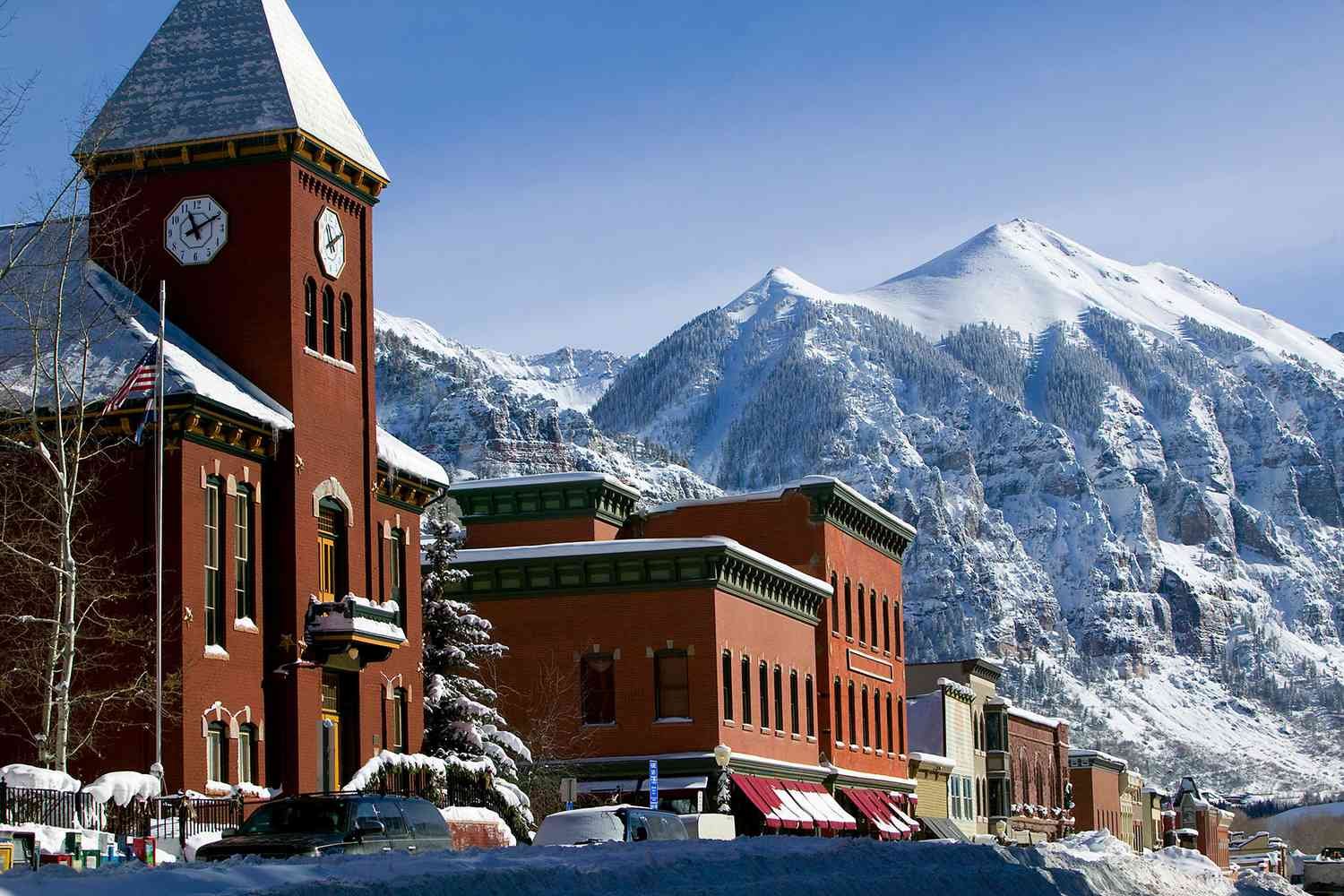
Telluride (about 8,750 feet) sits in a box canyon, and State Highway 145 is the most common route into town from the west, as part of the San Juan Skyway connecting Telluride to Cortez and Naturita. Everything we build arrives by truck over that kind of road. Laydown space is tight, so we plan deliveries in small drops, in the order we erect them.
Aviation, testing and support buildings
Owners and operators on the field want a hangar that protects aircraft and a shop that supports them. Manufacturers who test at altitude want conditioned work space, so we also quote manufacturing bays with higher power, lift and ventilation allowances. Storage for ground support equipment, fuel handling and maintenance parts rounds out a typical ramp-side package.
We keep each building simple. Fewer unusual features mean faster design, quicker permit review and lower cost per square foot. If a feature earns its keep, such as a taller eave for a crane or a lean-to for ground equipment, we add it as a priced option rather than hiding it in the base number.
Planning an erection in a short season
Telluride has a short building season. We plan foundation, steel and roof dry-in to fit it. If the schedule needs a winter pour, we price heat and blankets. If a permit review is pending, we release only the long-lead items, such as doors, and hold the rest until approval, so you do not carry risk you do not need.
For code, we confirm the adopted edition and the snow and wind criteria with the town or San Miguel County office before the engineer starts. We do not assume an edition. Compare with Durango, where the county lists specific loads, and Gunnison, where cold dominates.
Where else we work in the San Juans
From Telluride the closest of our pages is Durango to the south. Mountain airports and municipal buildings are common themes across this part of the state. If your project is a hangar in a different town, our aviation overview points to the right specifics.
Request a Telluride hangar or shop price
Send the use, the footprint and the aircraft or equipment that must fit. We will confirm the adopted code with the reviewing office, give a wind and snow basis in writing, and come back with a lead time and a per-square-foot range.
Related Service Areas
Next Step
Plan This Project With Us
Tell us about the site, the building and the schedule, and we will set up a review of scope, schedule, permits and inspections.
Common Questions
Check the wingspan, tail height and length of the aircraft. The airport's 17,000 square foot hangar can hold aircraft as large as a G-650. For a private hangar, we size the clear span and door opening to your aircraft with room to tow in and out.
A large door acts like a sail. Airport safety guidance notes that mountain top winds of 40 to 60 knots are not uncommon from December through March. We design the door frame, track and bracing to the site's wind load and add wind locks where the door design allows.
It depends on whether the parcel is in the town or in the county, and on the edition each office has adopted. We confirm with the reviewing office before the engineer stamps drawings, and we do not guess at an edition.
Often yes, with additions. A conditioned shop needs insulation, power and ventilation, and a test operation may need a crane or a reinforced slab. Tell us what you do and we will price the base building and the upgrades separately.
Mostly by State Highway 145 from the west. Space for staging is limited, so we deliver in small drops timed to the erection sequence. We also keep weather buffer in the schedule for winter travel.
PROJECT REVIEW
Tell us about the site, the building and the schedule, and we will set up a review of scope, schedule, permits and inspections.
SERVICE AREAS
See the Colorado communities where we plan and manage pre-engineered metal building construction.