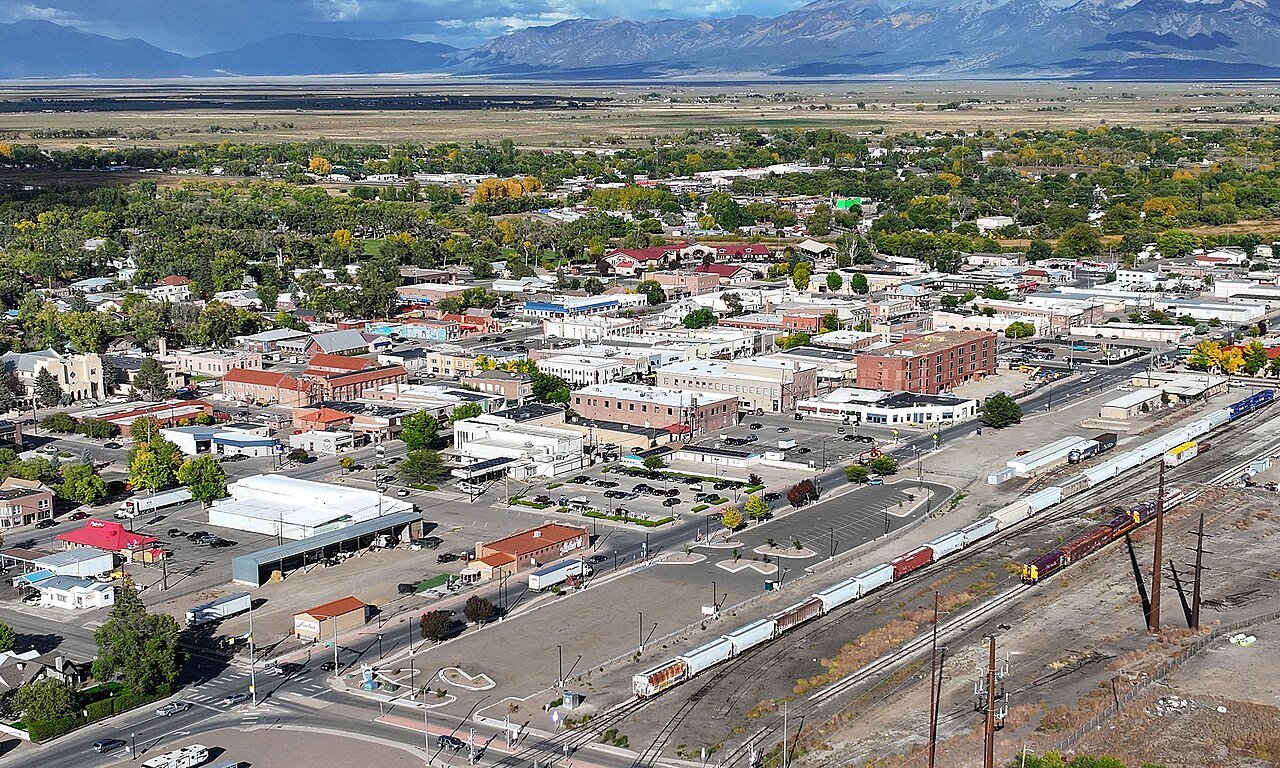
Cold decides the insulation package in Alamosa. The city sits at about 7,543 feet in the San Luis Valley, where winter nights are long and a heated shop or a produce warehouse has to hold its temperature without burning the owner's budget. We start there: the load package, the insulation spec, the lead time and a price per square foot, all on the first page.
The valley supports steady work. US 160 and US 285 meet in Alamosa, with US 160 running east-west and US 285 and State Highway 17 running north-south. The Colorado Pacific Rio Grande Railroad serves the city, and a Bustang Outrider line connects it to Pueblo. Alamosa has 9,806 residents at the 2020 census and is home to Adams State University. Farm service, food handling, education and regional trade all use steel buildings.
Energy projects have also reached the valley. The 30 megawatt Alamosa Solar Generating Project near the city, operated by Cogentrix Energy, entered commercial operation on May 10, 2012, supplying customers of Public Service Company of Colorado. Utility-scale sites need control buildings, storage and maintenance sheds, which suits our commercial metal buildings program.
Insulated shops, produce storage and equipment sheds
A cold-climate building needs three things: a tight envelope, a well-designed vapor control and a heating plan. We offer blanket insulation with a facing, or insulated metal panels that come as a factory-sealed sandwich. Panels cost more per square foot but go up faster and leak less air.
Produce and potato storage buildings in cold valleys need air handling, insulated walls and floors that handle moisture. We build the shell, openings and loads for the mechanical system; the refrigeration or ventilation designer sets the equipment. Coordinating those early avoids cutting panels later.
A regional hub in a wide valley
Alamosa is the place people in the surrounding valley come for supplies, services and schooling, and that makes its mix of buildings broader than the town size suggests. The railroad that built the town still serves it, the highways cross here, and the bus line to Pueblo ties it to the larger southern Colorado market.
That means storage and distribution for regional suppliers, shops for contractors and utilities, and warehouse space for farm inputs. A plain, well-priced pre-engineered metal building serves most of them, and the add-ons are what vary: doors, insulation, mezzanines and offices.
High valley conditions we plan for
Altitude, frost and snow. Frost depth drives footing depth, and snow load drives the frame. We do not guess either one; we get the numbers from the local building authority and from your geotechnical report. Wind sweeps across the flat valley floor, so cladding and bracing are checked for it.
Cold also affects construction. Concrete needs protection, panels have temperature limits, and the day length is short in winter. We schedule the foundation for the best weather available and tell you if a winter pour will add cost.
Permits and design values
Colorado adopts commercial building codes city by city and county by county, so we confirm the edition and the design values with the office that covers your parcel before we order steel. Energy code requirements matter more than usual in a heated building, since the envelope must meet whichever edition applies.
We submit stamped structural drawings, the foundation design, the design snow, wind and frost values, and an insulation schedule. If the building has a special use, such as food handling, extra review from other agencies may apply, and we tell you which ones to contact.
Farm, food and recreation
The valley economy runs on agriculture, and our agriculture and agribusiness buildings include equipment sheds, feed storage and processing shells. Outdoor recreation brings its own demand: rental shops, storage and indoor facilities. See recreation and sports for the long-span layouts we use.
Schools and colleges buy steel for shops, athletic storage and maintenance buildings. Our education building work follows public procurement rules and keeps documentation tidy for the district or campus.
How we run a valley job
We visit the site, confirm access and utilities, and get the snow, wind and frost values in writing. We then price the building, list exclusions, and give a lead time. After the order, we manage steel delivery, crane time and crew dates so each trip counts.
Alamosa is a long way from the Front Range. We cut mobilization cost by planning one continuous erection window and by pairing the job with nearby work in Salida or Walsenburg where possible.
Cost drivers in cold country
Insulation, snow load and heating are the three that move the price most. A heated building needs more insulation than an unheated one, and the roof panels, fasteners and sealants should match the thermal design. Snow load adds steel weight. Heating adds an operating cost the owner pays every winter.
Investing in a better envelope usually lowers that operating cost. We show the first cost and a simple comparison of options, so you can judge them for your own building and your own fuel price.
Doors deserve the same scrutiny. A large overhead door in a heated shop loses heat every time it opens, so insulated sections, tight seals and a smaller opening where the work allows pay back over a winter or two. We list door options with their first cost and let you decide how much opening the work really needs.
Get an Alamosa steel building price
Send the use, the size and whether the building will be heated. We will return the insulation spec, the snow and wind package, the lead time and a price per square foot.
Related Service Areas
Next Step
Plan This Project With Us
Tell us about the site, the building and the schedule, and we will set up a review of scope, schedule, permits and inspections.
Common Questions
It depends on the use and the heating plan, and your energy code requirements. A shop with a radiant heater needs less than a conditioned office or a produce cooler. We price blanket insulation and insulated panels at a few R-values and show the first-cost difference, so you can weigh it against heating cost.
We build the steel shell, openings, loads and floor assumptions, and your refrigeration or ventilation designer sets the equipment. Early coordination matters, because duct penetrations, fan loads and wall insulation all affect the frame. We ask for the mechanical design before we finalize drawings.
The building authority and your geotechnical engineer set it. We do not assume. Our drawings follow whatever depth they give, and we show the effect on the foundation scope in the proposal.
Yes, within limits. Erection can continue in most weather if it is safe. Concrete and panel sealants are the sensitive items, and we plan around them. We tell you before starting if winter will add days or cost.
Yes. Control buildings, storage sheds and maintenance shops fit a standard frame. The utility or developer usually supplies the equipment layout, and we coordinate openings, slab loads and cable paths so the building fits the electrical design.
PROJECT REVIEW
Tell us about the site, the building and the schedule, and we will set up a review of scope, schedule, permits and inspections.
SERVICE AREAS
See the Colorado communities where we plan and manage pre-engineered metal building construction.